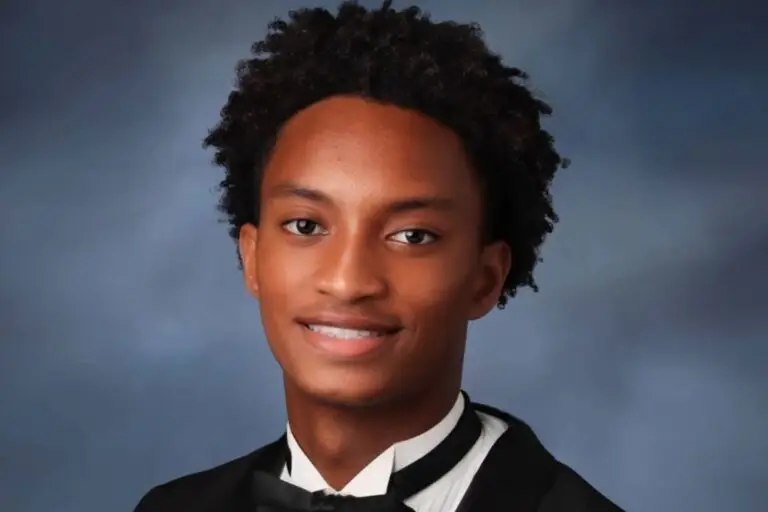

A Mississippi grand jury says the circumstances surrounding the death of 18-year-old Nolan Wells were “consistent with drowning.”
But neither of the two medical examinations of Wells established drowning as his official cause of death.
That distinction is fueling new questions from Wells’ family just days after a Jackson County grand jury unanimously declined to indict anyone in connection with his death.
The grand jury found no credible evidence that Wells’ death resulted from criminal conduct or was racially motivated. According to the Associated Press, jurors said the position and condition of Wells’ body, along with the time and location where he was found, were consistent with drowning.
However, both the Mississippi state medical examiner and Dr. Roger Mitchell Jr., the independent forensic pathologist retained by Wells’ family, ultimately classified Wells’ cause and manner of death as undetermined, according to Mississippi Today.
That means drowning has not been medically established as Wells’ cause of death.
What the autopsies could — and could not — determine
Wells disappeared during a July Fourth boating trip to Horn Island off the Mississippi Gulf Coast. His body was found in the water two days later.
The independent examination documented blunt-force injuries to Wells’ head, neck and back. But the examination did not establish those injuries as the cause of his death, and Mitchell’s final determination remained undetermined.
There is also an important limitation involving one of the most basic questions in a suspected drowning: what did the lungs and airway show?
Mitchell could not independently examine Wells’ throat and lungs because those organs had been removed during the state’s original autopsy. That limitation was disclosed when the family released the preliminary findings in July. WAPT reported on the missing organs and limitations of the independent examination.
The state medical examiner, however, conducted the first autopsy and therefore had the opportunity to examine Wells’ lungs and airway.
What that examination specifically found regarding water in Wells’ lungs or airway has not been publicly disclosed in the detailed reporting available on the case.
In July, the Jackson County District Attorney’s Office said the state autopsy findings would not be released publicly and instead would be presented to the grand jury. WAPT reported at the time that the completed state autopsy was being withheld from public release.
Mitchell later traveled to Mississippi and gained access to reports from the state medical examiner before completing his final independent report, according to Mississippi Today.
Even after reviewing those additional records, Mitchell’s final determination remained the same: Wells’ cause and manner of death were undetermined.
The state medical examiner also ultimately reached an undetermined classification.
So there are two distinct unanswered questions.
Did the first autopsy document water or other findings in Wells’ lungs or airway that supported drowning?
And if it did, why did the state medical examiner still classify Wells’ cause of death as undetermined rather than drowning?
The publicly released information does not currently answer those questions.
Grand jury points to drowning
Despite the medical uncertainty, the grand jury concluded that the circumstances surrounding Wells’ death were consistent with drowning.
According to Mississippi Today, the grand jury issued 132 subpoenas and heard testimony from 43 witnesses while reviewing physical evidence, digital evidence, GPS information, cellphone records, videos and investigative reports.
The 23-member grand jury unanimously returned a “no true bill,” meaning no criminal indictments would be issued based on the evidence presented.
But “consistent with drowning” and “cause of death: drowning” are not the same conclusion.
The first means the circumstances can fit a drowning scenario. The second would be a medical determination identifying drowning as the cause of death.
Wells’ parents have questioned that distinction.
“We don’t know what happened to our son,” Wells’ mother, Christine Wonsley, told WAPT. She questioned how the grand jury could characterize the circumstances as consistent with drowning while the blunt-force injuries and cause of death remained unresolved. Watch WAPT’s interview with Wells’ parents.
Mitchell has also described drowning as a diagnosis of exclusion — meaning other potential causes must be ruled out before drowning can be established. His examination could not determine whether Wells entered the water voluntarily or involuntarily, or whether he was conscious when he entered it, according to Mississippi Today.
New dispute over Nolan Wells’ cellphone
Now another issue is drawing scrutiny: Wells’ cellphone.
A digital-forensics expert retained by Wells’ family is challenging Jackson County District Attorney Angel Myers McIlrath’s account of why a planned joint examination of the phone did not occur.
Andrew Garrett, CEO of Garrett Discovery, says investigators and the family initially agreed to conduct a simultaneous examination with representatives from both sides participating.
Garrett says those conditions later changed, requiring the examination to take place at a state laboratory where attendance would be restricted to law-enforcement personnel.
McIlrath has said the family’s examiners began a private examination before the scheduled mutual extraction and later informed investigators that the joint examination would not occur.
Garrett disputes the circumstances that led to that decision, saying the family proceeded independently after learning its examiner would not be allowed to participate in the government examination.
WAPT reported on the competing accounts Thursday.
According to Garrett, the forensic analysis included Snapchat and Instagram activity, GPS information, telephone records and Apple Health data.
Garrett also said investigators identified messages that appeared to have been deleted or unsent by their senders.
A preliminary report was provided to prosecutors in August, and three final forensic reports were delivered in September and considered by the grand jury, according to Garrett.
The cellphone has drawn attention throughout the investigation because Wells did not have it with him when his body was recovered. His parents later obtained the device from someone who had been on the July Fourth trip.
What remains unanswered?
The grand jury’s decision answers one question: based on the evidence presented, jurors did not find sufficient evidence to indict anyone.
It does not establish exactly how Nolan Wells died.
Both medical examiners ultimately classified his cause and manner of death as undetermined.
The detailed findings from the state’s original examination of Wells’ lungs and airway have not been publicly disclosed in the reporting available on the case.
And the independent pathologist could not perform his own examination of those organs because they had been removed during the first autopsy.
That leaves a central question:
If the medical evidence could not establish drowning as Nolan Wells’ cause of death, what evidence led the grand jury to conclude that the circumstances were consistent with drowning?