
COVERAGE ENDEDLAST UPDATED SEPTEMBER 4 AT 2:24 PM EDT

Judge Finally Declares Mistrial in Lindsay Clancy Trial

A Massachusetts judge declares a mistrial in the Lindsay Clancy murder case after jurors failed to reach a unanimous verdict following seven days of deliberations.

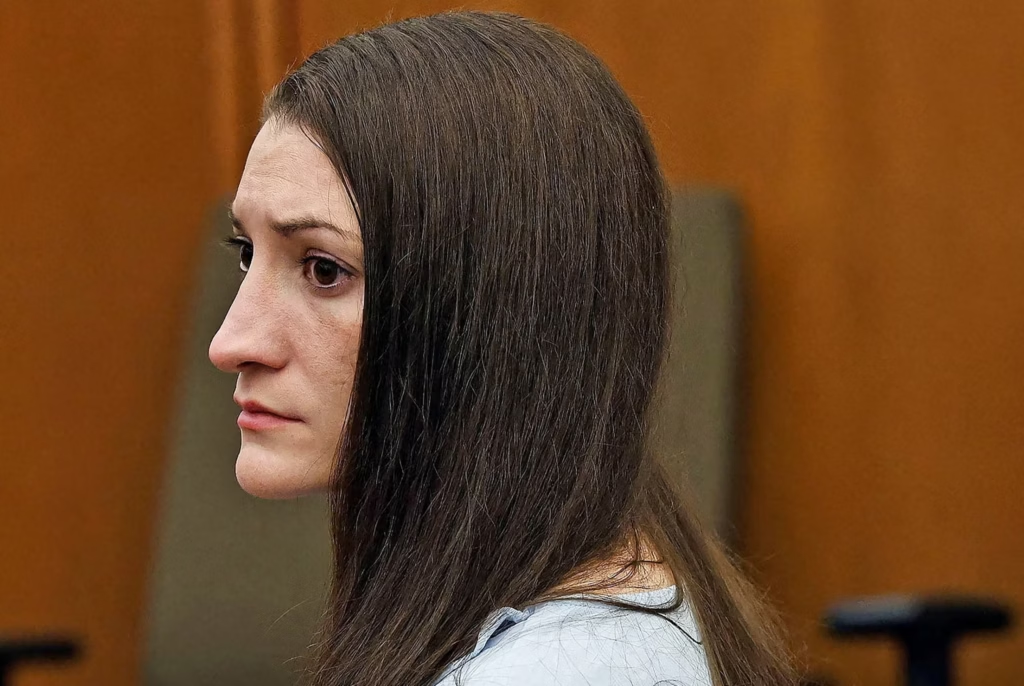
Linday Clancy sits in courtroom

LIVE COVERAGE ARCHIVE

Latest updates

Newest first

Judge Finally Declares Mistrial in Lindsay Clancy Trial

Judge William Sullivan has officially declared a mistrial in the Lindsay Clancy murder trial after jurors failed to reach a unanimous verdict following seven days of deliberations.

Earlier Friday, Sullivan delayed formally ending the trial for one hour so Clancy’s defense could seek emergency intervention from the Massachusetts Supreme Judicial Court. The defense’s effort did not prevent the mistrial from going forward.

The case now moves to the next question: whether prosecutors will retry Clancy.

One-Hour Deadline Passes as Clancy Defense Awaits High Court Action

The one-hour window granted to Lindsay Clancy’s defense to seek emergency relief has now passed.

Judge William Sullivan had delayed formally ending the trial to give defense attorney Kevin Reddington time to ask the Massachusetts Supreme Judicial Court to intervene after jurors again reported they could not reach a unanimous verdict.

The defense has sought an emergency stay, but there has not yet been a publicly reported ruling from the state’s highest court. Until that happens — or the trial court reconvenes and formally closes the case — the procedural status remains developing.

Clancy Mistrial Delayed as Defense Seeks Emergency Stay

The Lindsay Clancy murder trial remains in limbo after Judge William Sullivan said he intended to declare a mistrial following a third note from jurors saying they could not reach a unanimous verdict.

Before formally ending the trial, Sullivan granted Clancy’s defense one hour to seek an emergency stay from the Massachusetts Supreme Judicial Court. Defense attorney Kevin Reddington is asking the state’s highest court to intervene before the mistrial becomes final.

Jurors have deliberated for seven days and nearly 40 hours. The defense has argued that one juror is refusing to properly follow the court’s instructions on reasonable doubt, while Sullivan previously declined a request to remove or question that juror further.

For now, the key question is whether the Supreme Judicial Court grants the emergency stay. If it does, the mistrial could be temporarily blocked while the higher court reviews the defense’s argument.

BACKGROUND

What to know about this story

A Massachusetts judge declared a mistrial Friday in the murder trial of Lindsay Clancy after jurors said they could not reach a unanimous verdict following seven days of deliberations.

Judge William Sullivan said he had no choice but to declare a mistrial after the jury remained deadlocked in the high-profile case.

Clancy, 36, was on trial in connection with the January 2023 deaths of her three children — 5-year-old Cora, 3-year-old Dawson and 8-month-old Callan — at the family’s home in Duxbury, Massachusetts.

Jury Remained Deadlocked

Jurors had been deliberating for about a week and repeatedly told the court they were struggling to reach a unanimous decision.

Earlier in the week, Sullivan gave the jury a special instruction urging them to continue deliberating. By Thursday, defense attorney Kevin Reddington argued that one juror was refusing to properly follow the court’s instructions on reasonable doubt and asked that the juror be replaced.

Sullivan declined that request, saying it would not be appropriate for him to take sides in the jury’s deliberations. Read CBS Boston’s coverage

The jury resumed deliberations Friday before the deadlock ultimately led to the mistrial.

Mental Health Was Central to the Case

Clancy’s defense argued that she was not criminally responsible for the deaths because she was suffering from postpartum psychosis.

The prosecution disputed that defense and argued that Clancy should be held criminally responsible.

The issue of criminal responsibility became the central question jurors were asked to decide. Read WCVB’s trial coverage

What Happens Next?

A mistrial is not an acquittal.

Because the jury did not reach a verdict, prosecutors can decide whether to try Clancy again. A decision on a retrial was not immediately announced.

The mistrial brings an end to this trial, but not necessarily to the criminal case.