
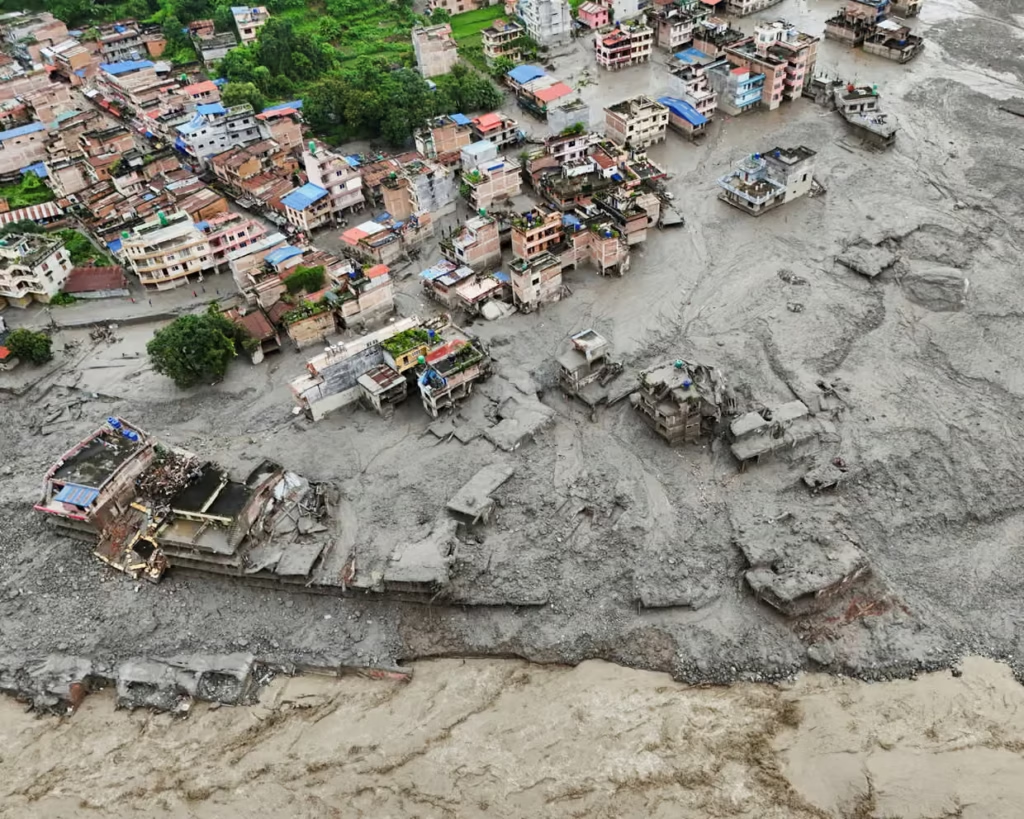
More than 390 people are dead and more than 1,400 remain missing after catastrophic flooding tore through communities along the border between Nepal and China’s Tibet region.
The disaster began Wednesday when a high-altitude glacier collapsed, sending ice, rock and debris into mountain rivers and unleashing a massive surge of water and mud downstream.
Reuters reports that the debris flow traveled at roughly 50 meters — or about 165 feet — per second in some areas, leaving people with little time to escape.
Entire Communities Hit
The flooding destroyed homes, roads, bridges and other infrastructure across the mountainous region. In Nepal, rescue teams are using helicopters to search areas that have become difficult or impossible to reach by road.
The Associated Press reports that at least 910 people were reported missing in Nepal, while authorities in Tibet reported more than 550 missing.
Hundreds of foreign travelers are also among those unaccounted for, including more than 60 Americans. Many people traveling through the region were tourists or pilgrims headed toward Mount Kailash in Tibet, a sacred destination for several religious traditions.
What Caused the Flood?
Initial reports raised the possibility that an earthquake caused the glacier to collapse. But the U.S. Geological Survey later determined that seismic activity detected in the area was generated by the collapse of glacial rock and ice itself.
The collapse sent a mixture of ice, rock, mud and water rushing through the river system.
Scientists have warned that warming temperatures are increasing risks throughout the Himalayan region as glaciers retreat and mountain terrain becomes increasingly unstable. Researchers are still determining exactly what role climate change played in this particular collapse.
Another Flood Threat
The danger may not be over.
Authorities in both Nepal and China are now monitoring lakes created when debris from the disaster blocked waterways.
Reuters reports that officials have warned those lakes could breach, potentially sending another surge of water downstream. Additional rain expected in the region could increase that risk.
Residents and rescue workers near vulnerable riverbanks have been urged to move to safer ground.
Search-and-rescue operations continue as officials warn the death toll could rise.